
Differentiated Capabilities to Address Pain
At Latigo, our deep understanding of pain across biology, clinical translation, and clinical development positions us to deliver meaningful patient benefit and to change the current treatment paradigm of pain medicines.
Differentiated Preclinical Electrophysiology and
Microneurography Tools
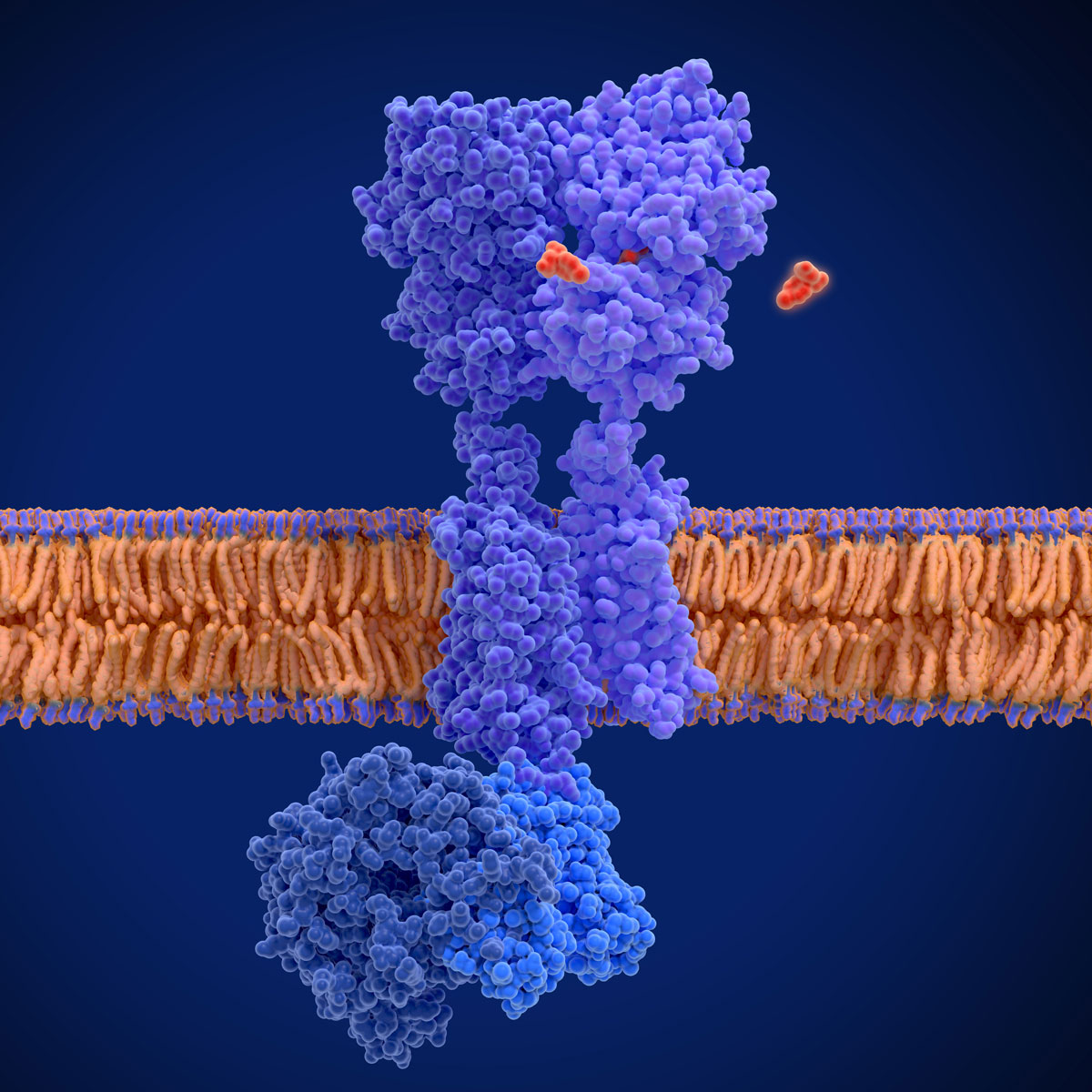
We employ two preclinical models – electrophysiology in human DRG neurons and NHP microneurography to measure the effect of compounds on nociceptor function and action potential firing, which are measures of target engagement. Both of these models are quantifiable and do not require animal behavioral models which can be challenging to translate to humans. These models work for Nav1.8 as well as other ion channel targets that control pain signal transmission.
Cold Pressor Test as Validated Biomarker for Clinical Trials in Pain
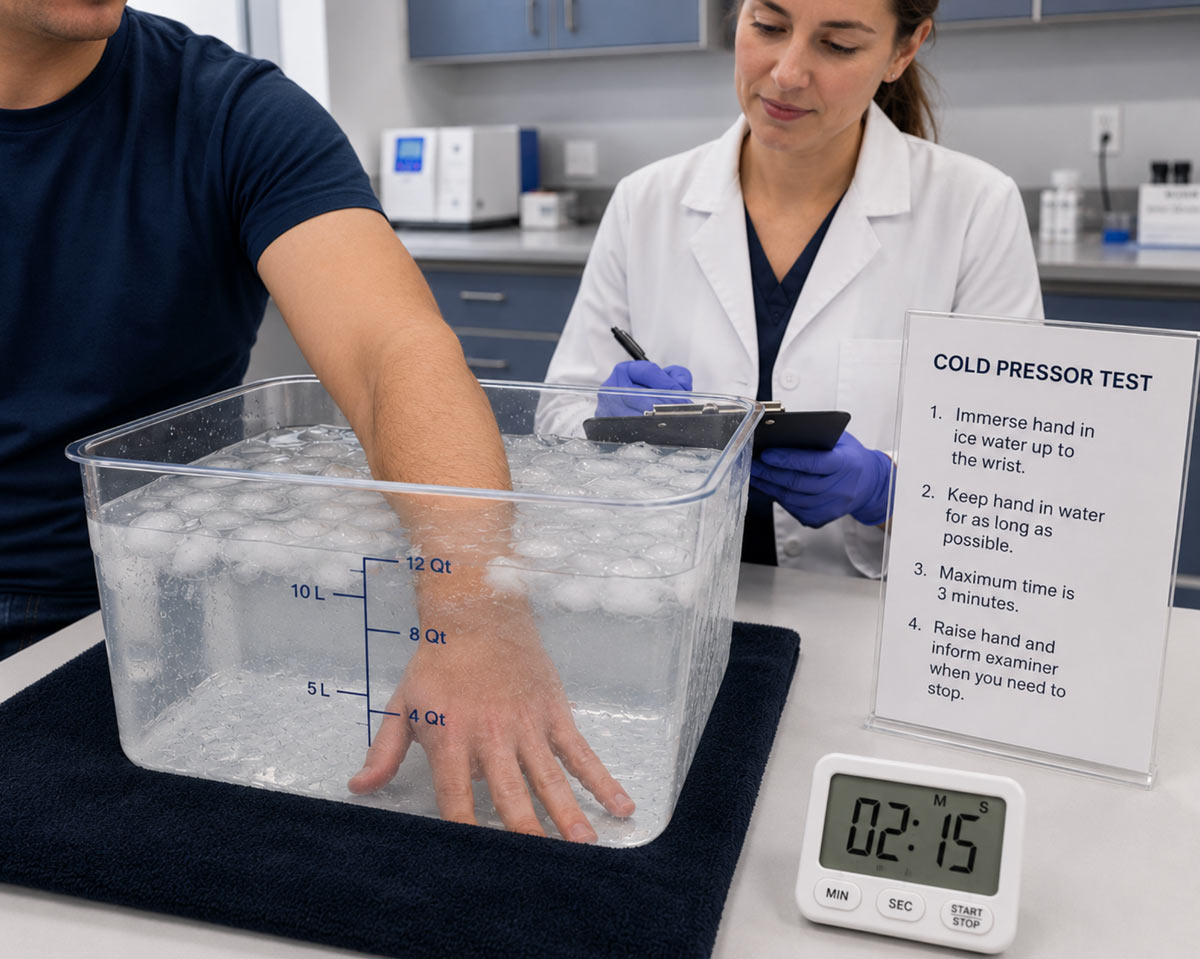
We have identified and refined cold pressor test or CPT methodology as a quantifiable, repeatable clinical endpoint that has translated into potentially pivotal clinical trial outcomes.
What is CPT?
The CPT is a human experimental pain model to assess analgesic drug effect. Healthy volunteers immerse one hand into a bath of circulating cold water (1° ± 0.5° C) and are instructed to remove it only when the pain from the cold is no longer tolerable. The time from hand immersion to removal is measured as the pain tolerance threshold (PTT). We have optimized CPT to be a more robust and rigorous protocol using a crossover design.
Latigo’s process provides significant advantage in the development of pain medications by identifying compounds with greatest potential analgesic effect and characterizing onset of action early in clinical development.
Deep Clinical Development Expertise in Pain
We have a highly experienced team with deep expertise in the development of pain medicines.
- Conducted more than 250 pain studies.
- Pioneered proprietary methodologies that enhance the rigor and clinical outcomes of pain management studies.
- Deep understanding of clinical trial design and patient selection.
The Role of Ion Channels
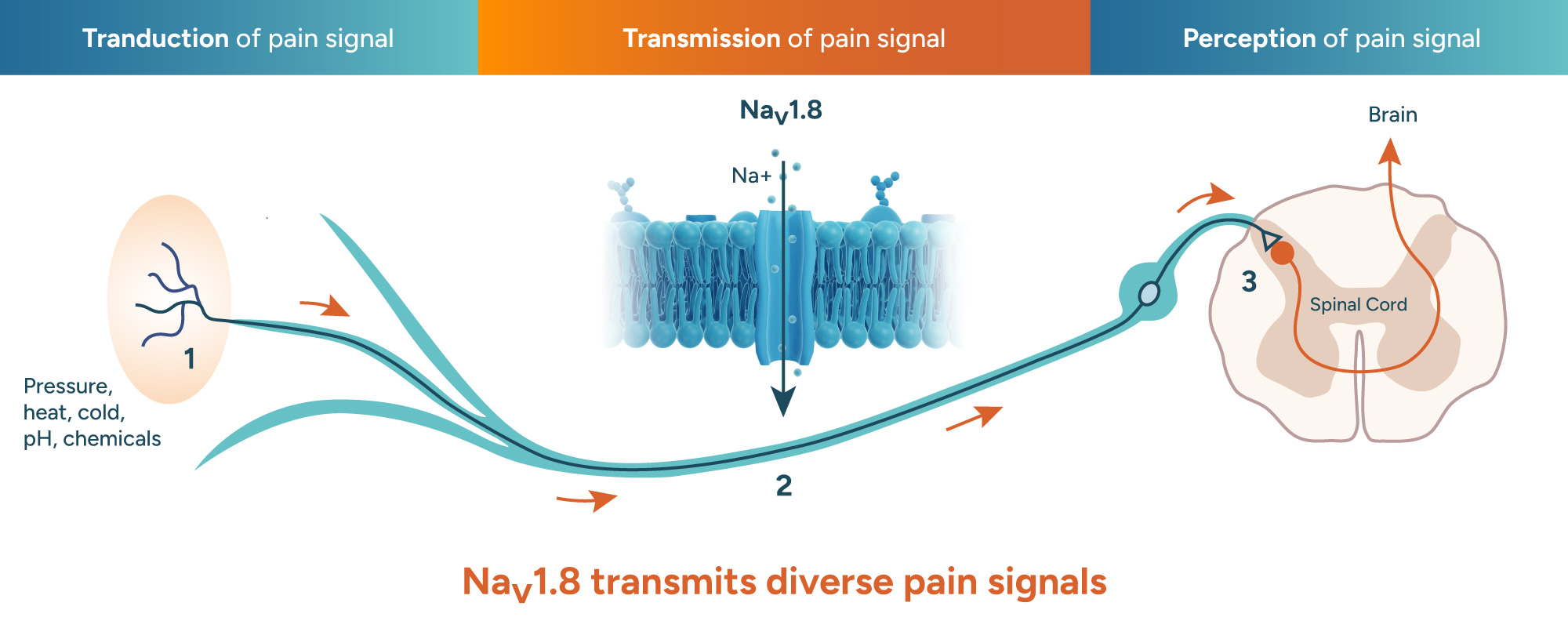
Nociception is the process by which pain signals are transmitted by peripheral nociceptors, or pain-sensing neurons, to the brain. Many nociceptors are located in the dorsal root ganglia (DRG), clusters of neurons associated with spinal nerve roots that play a critical role in transmitting pain signals from the periphery to the central nervous system.
Ion channels are specialized proteins that act as the body’s electrical switches, controlling the flow of ions into and out of cells. In the nervous system, they play a central role in pain signaling and represent important targets for the development of non-opioid pain medicines.
Voltage-gated sodium (Nav) channels regulate neuronal excitability by controlling the flow of sodium ions across cell membranes, enabling the generation and propagation of electrical signals. Nav1.8 is specifically expressed in DRG and trigeminal ganglion neurons and plays a key role in the transmission of pain signals, making it a promising target for novel pain therapies.
Nav1.8 and the Transmission of Pain
Nav1.8 is a voltage-gated sodium ion channel expressed in dorsal root ganglion (DRG) neurons that plays a significant role in pain transmission.
Nav1.8 is substantially expressed in peripheral nerve tissue and not in the brain or other tissue and therefore not associated with addiction.
Validation of Nav1.8
The role of Nav1.8 as a pain target has been genetically validated through the investigation of both gain of function mutations and single nucleotide polymorphisms (SNPs), as well as validated in the clinic and from a regulatory perspective with the approval of suzetrigine in 2025. The analgesic effects of Nav1.8 inhibition with VX-150 were observed in three Phase 2 proof-of-concept studies in acute postoperative pain, OA pain, and small fiber neuropathy.